
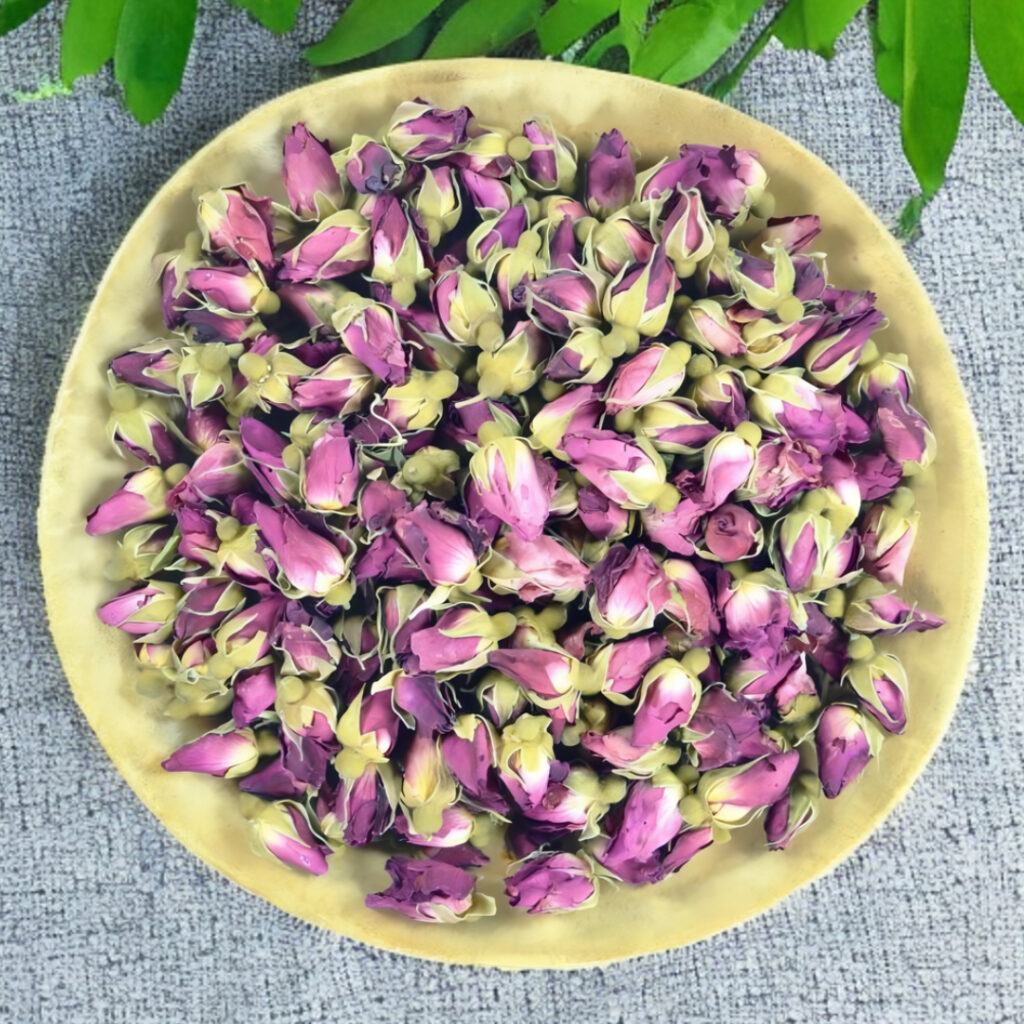
“It tastes like drinking perfume” is the most common complaint about rose tea, and it is a fair description of what a badly brewed cup does. It is usually fixable in one adjustment.
1. It steeped too long
This is the cause about four times out of five. Rose releases its pleasant aroma quickly — within four or five minutes — and after that keeps releasing heavier floral compounds that tip from “fragrant” into “cosmetic”.
Fix: 4–6 minutes, then strain the buds out. If you have been leaving them in the pot, that alone will probably solve it.
2. The water was too hot
Boiling water poured straight onto delicate petals drives off the light top notes first and leaves the heavy ones behind. You end up with the base of the aroma and none of the brightness — which is exactly what “soapy” describes.
Fix: let the kettle stand a minute. Around 90–95°C.
3. Too much rose
Less common, because most people under-dose rose rather than over-dose it. But if you have been generous and steeping long, the two compound.
Fix: 5–8 buds per cup, and adjust from there.
Some people simply taste it more
Worth knowing before you blame your brewing: sensitivity to floral aroma compounds varies genuinely between people, in the same way it does with coriander tasting like soap to a minority. If a correctly brewed, gently steeped rose tea still reads as perfume to you, that may just be your palate rather than a mistake.
If so, rose still works well as a small component in a blend — two or three buds in a pot of chamomile adds roundness without the perfume becoming the main event.