
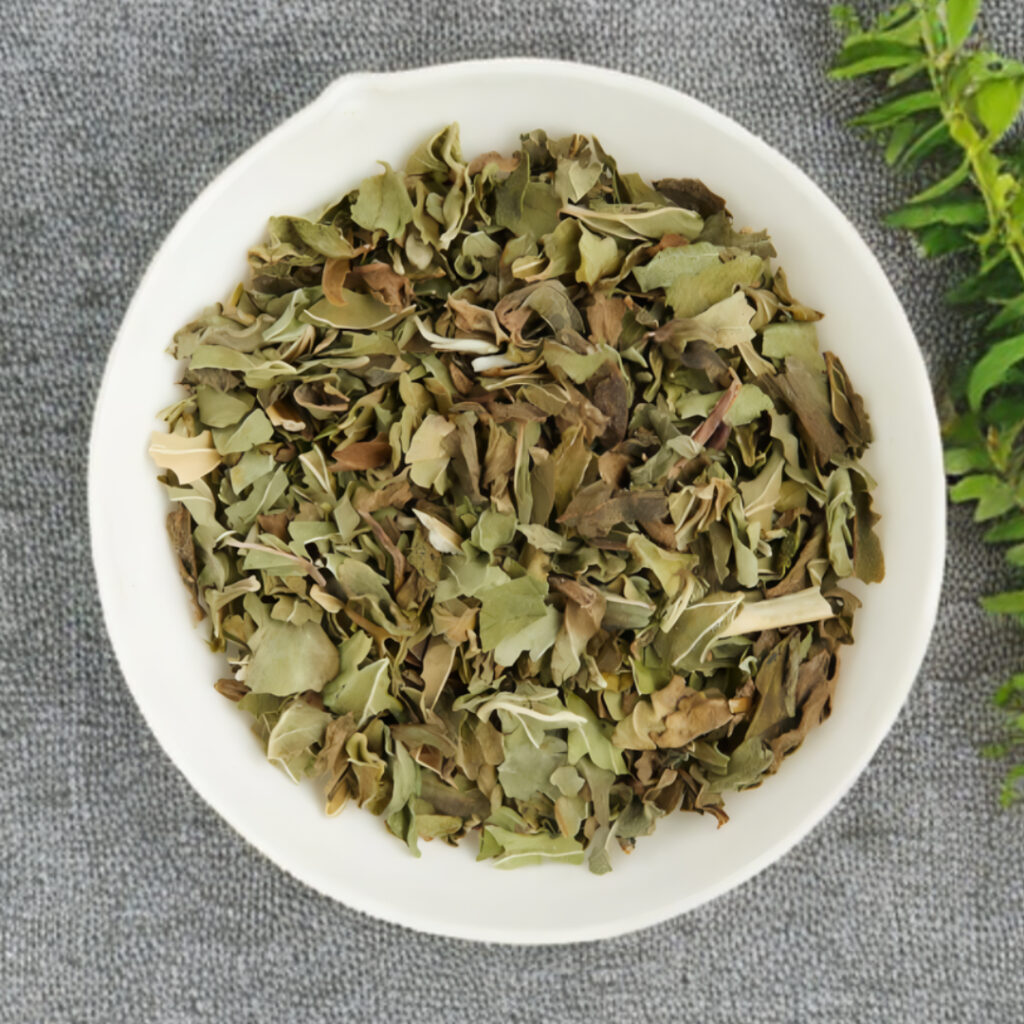
Peppermint and spearmint are two different mint plants, and the taste difference comes down to one compound. Peppermint (Mentha × piperita) is a natural hybrid of spearmint and watermint; its oil is roughly 40% menthol, which is what makes it taste cold. Spearmint (Mentha spicata) has under 1% menthol and leads instead with carvone, which reads as sweet and slightly fruity. They look similar, they are sold side by side, and they taste substantially different — if you have ever bought mint tea and found it either disappointingly mild or startlingly cold, this is why.
Spearmint vs peppermint: what is the difference?
| Compared | Peppermint | Spearmint |
|---|---|---|
| Plant | Mentha × piperita, a hybrid of spearmint and watermint | Mentha spicata, a species in its own right |
| Main aroma compound | Menthol (roughly 40% of the oil) | Carvone; menthol under 1% |
| Taste | Sharp, cooling, clean, with a definite bite | Softer, sweeter, rounder, more herbaceous |
| Sensation | A cold feeling that lingers, even in a hot cup | Little or no cooling |
| Where you usually meet it | Peppermint tea, sweets, toothpaste | Mojitos, Middle Eastern mint tea, cooking, chewing gum |
| Caffeine | None — a herbal infusion, not a tea leaf | None — a herbal infusion, not a tea leaf |
The one number that explains it
Menthol. Peppermint oil is roughly 40% menthol. Spearmint is under 1%.
Menthol is what triggers the cold sensation — it activates the same nerve receptors that respond to low temperature, which is why peppermint tastes cold even when the tea is hot. Spearmint has almost none of it, and instead leads with carvone, a compound that reads as sweet and slightly fruity.
Spearmint tea vs peppermint tea: which should you drink?
- Peppermint tea: sharp, cooling, clean. A definite bite. The finish is long and leaves your mouth feeling cold. Assertive enough to stand on its own.
- Spearmint tea: softer, sweeter, rounder. More herbaceous, less bracing. This is the mint in mojitos and in Middle Eastern mint tea, where it is meant to sit alongside other flavours rather than dominate.
Neither is better. They are different tools. If you want something clean and cooling after a heavy meal, peppermint. If you want something gentle you can drink a lot of, or a mint to blend with other leaves, spearmint.
Is spearmint the same as mint?
“Mint” is the name of the whole genus, Mentha, which has well over a dozen species. In everyday use, though, when a recipe or a packet says simply “mint”, it almost always means spearmint — that is the mint in most gardens, most kitchens and most mint sauces. So “spearmint vs mint” is usually a comparison of a plant with itself. Peppermint is the exception people notice, because the menthol makes it taste so different.
How can you tell if your mint tea is peppermint or spearmint?
If a packet just says “mint tea”, it is more often spearmint or a blend. If it says peppermint, it should be peppermint — and you will know within a sip, because the cooling is unmistakable.
Ours is peppermint, sold as whole dried leaf rather than milled, which matters more with mint than with most things: menthol is volatile, so ground mint loses its punch fastest.
Does peppermint or spearmint tea have caffeine?
Neither. Both are infusions of a mint leaf, not of the tea plant (Camellia sinensis), so there is no caffeine in either — nothing has been removed; it was never there. The cooling “lift” of peppermint is menthol working on the nerves in your mouth, not a stimulant.
Brewing peppermint so it stays sharp
- Cover it. The single most important thing. Menthol escapes with the steam — an uncovered cup smells wonderful and tastes flat.
- 2–3g per cup, water just off the boil, 5–8 minutes.
- It will not turn bitter if you forget it, unlike lemongrass. Longer just means stronger.
- Cold brew it in summer. Peppermint is one of the better cold brews — see cold brewing.