
Nam krachiap (น้ำกระเจี๊ยบ) is the deep crimson drink sold from Thai market stalls in bottles so dark they look almost black until you hold one to the light. It is sharply sour, deeply coloured, and one of the most refreshing things to drink in heat.
It is not the flower
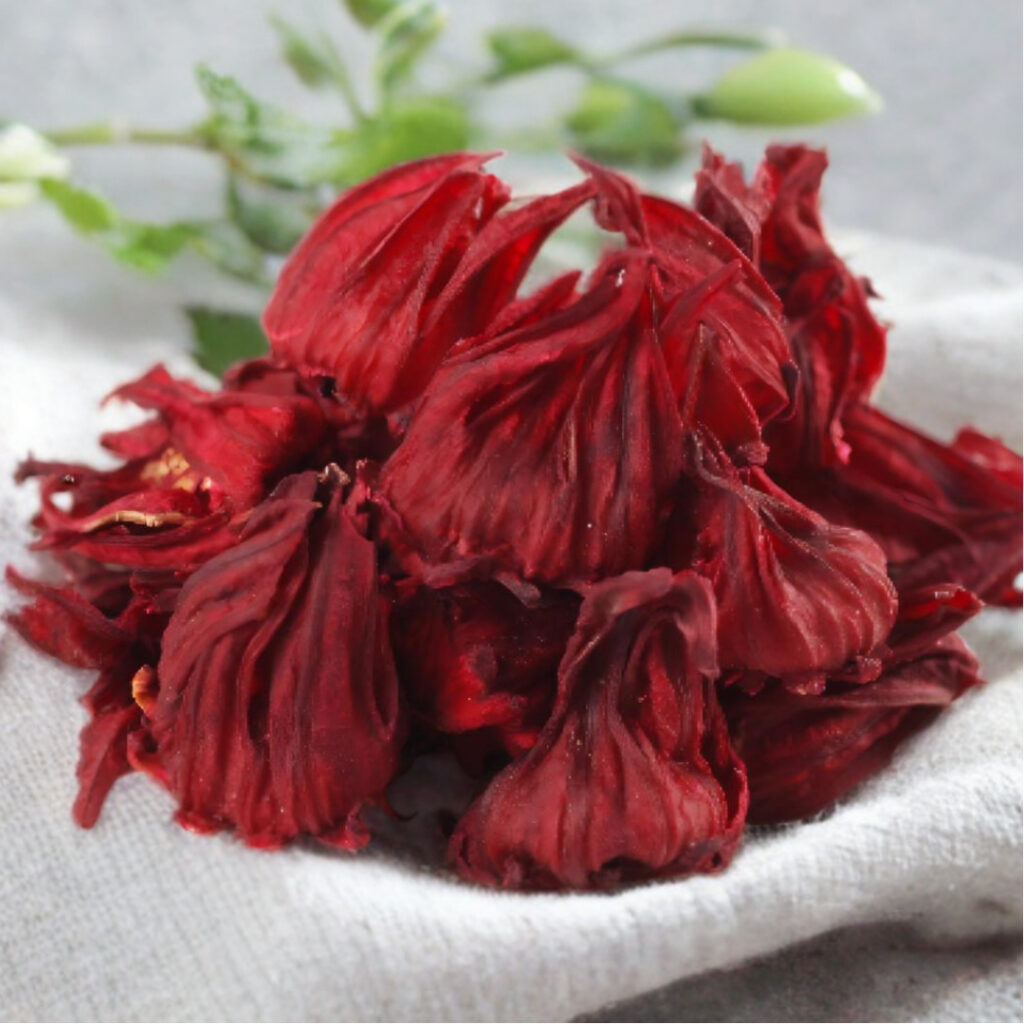
This trips up almost everyone. Roselle (Hibiscus sabdariffa) does produce a flower, but the flower is not what you brew. What is dried and sold are the calyces — the fleshy, deep-red cup-shaped structures that remain around the seed pod after the flower itself has fallen away.
They are sold as “hibiscus flowers” almost everywhere, ours included, because that is the name shoppers search for. But if you are wondering why the dried pieces look like thick red husks rather than petals, that is why.
How to brew it
Roselle gives up colour and acid very fast — considerably faster than most people expect — so the main risk is going too far, not too short.
- Use about 10g to 1 litre, or 2–3 calyces per mug.
- Water just off the boil.
- Steep 5–8 minutes for a drink; the colour is fully out within two.
- Strain. The softened calyces are edible and are sometimes candied.
For the concentrated market-stall style, simmer 20g per litre for 10 minutes instead, sweeten heavily while hot, then dilute to taste. That concentrate keeps several days refrigerated.
How tart is too tart
Roselle is genuinely sour — the comparison people usually reach for is cranberry, and it is a fair one. Unsweetened, it is bracing to the point that many find it hard going.
Thai versions are sweetened substantially, and the sweetness is not decoration: it is what makes the acidity read as refreshing rather than aggressive. Start sweeter than instinct suggests, then pull back on the next batch.
Sweeten while the infusion is hot. Sugar stirred into a cold, acidic drink stays stubbornly at the bottom. Whole stevia leaf behaves the same way — it gives up its sweetness to heat, not to a cold jug.
Why the colour is so intense
The same anthocyanin pigments that make butterfly pea blue, sitting in a naturally acidic environment. Anthocyanins run red at low pH, and roselle supplies its own acidity — so unlike butterfly pea, it arrives already at the red end and stays there.
It stains. Use a jug you do not mind discolouring, and rinse it promptly.
Served cold
This is how it is drunk in Thailand almost without exception. Brew strong, sweeten hot, chill completely, then pour over ice. A slice of lime is unnecessary — there is more than enough acidity already — but a bruised stalk of lemongrass in the jug while it chills works well.