
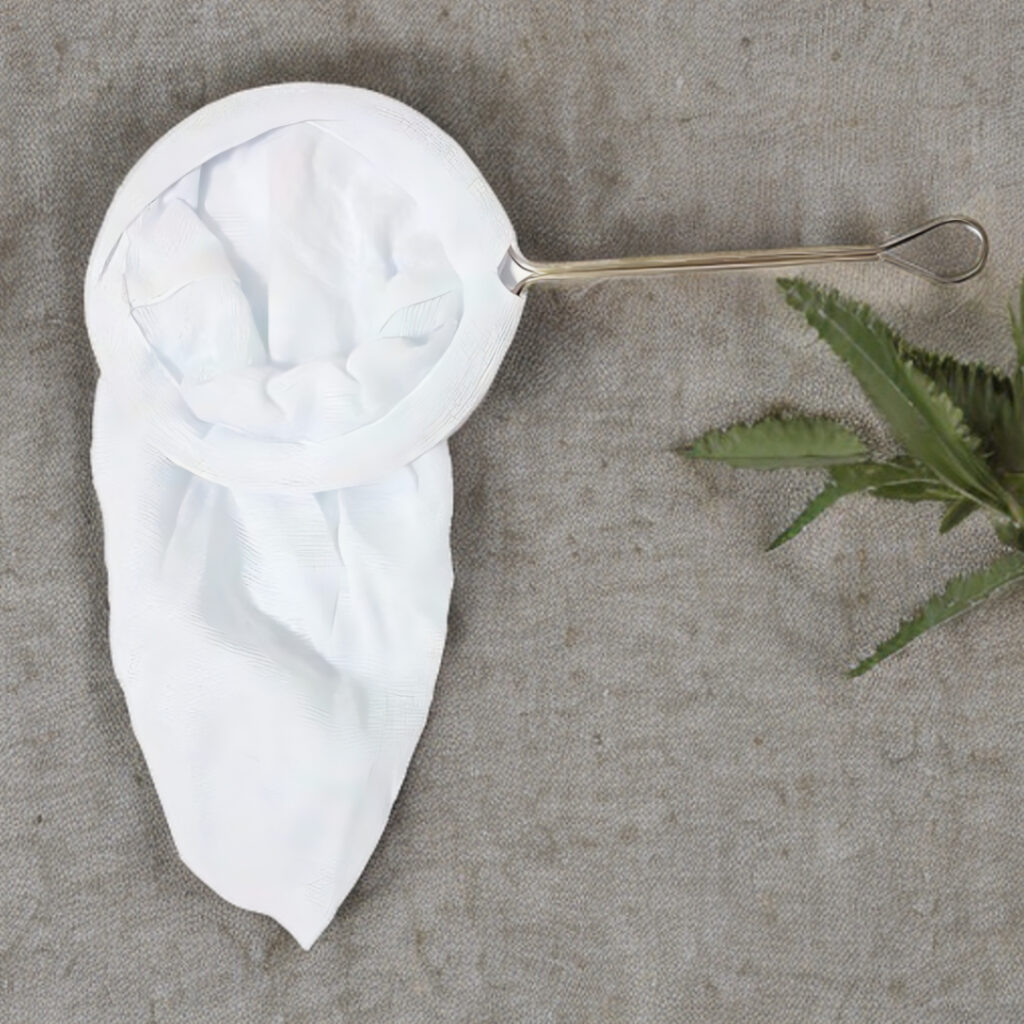
Search for a Thai tea strainer and you will get two completely different objects: a long cloth sock on a metal ring, and a fine stainless mesh basket. They are not interchangeable, and buying the wrong one is a common and annoying mistake. Here is which does what.
The cloth sock
The sock — a muslin or cotton bag on a wire handle — is the tool for cha yen, Thai iced tea. That drink uses finely ground black tea, brewed very strong, and the grounds are close to dust. A sock holds them, and the technique involves pulling the tea repeatedly between vessels to aerate it.
If you are making the orange, sweetened, condensed-milk iced tea you have had in Thai restaurants, you want a sock. It is the right tool and nothing else does the job as well.
Its drawbacks are real, though: cotton stains permanently, holds oils from previous brews, and needs to be kept scrupulously clean or it will sour. It also cannot be put away damp.
The fine-mesh strainer
A stainless fine-mesh strainer is the tool for whole-leaf and whole-flower infusions — which is everything we sell. Dried pandan blades, lemongrass pieces, whole rose buds and butterfly pea flowers are far too big for a sock to be necessary, and far too big to fit comfortably in a teabag.
The reason it matters is space. Whole botanicals need room to move and unfurl in the water; that movement is how the aroma gets out. Cram them into a small infuser ball and you get a weak, uneven cup no matter how long you wait. A wide mesh basket lets them swim and then catches them on the way out.
Ours is stainless, fine enough to catch small fragments, and dishwasher safe. See the strainer →
Which do you actually need?
- Making cha yen from ground Thai tea mix? Buy a sock.
- Brewing whole leaves, flowers or dried fruit? Buy a mesh strainer.
- Both? They are cheap. Keep them separate — a sock used for sweetened, milky tea should never go near a delicate floral infusion.
Using a mesh strainer properly
Two habits make a noticeable difference:
- Brew loose, strain after. Let the botanicals move freely in the pot and pour through the strainer into the cup, rather than steeping inside the basket. You get a stronger, more even extraction.
- Do not pack it. If you are using a basket in the cup, fill it no more than a third. Leaves swell.
Cleaning it so it does not taint the next brew
Mesh is easy, but it is not maintenance-free. Rinse it under hot water immediately after use, from the outside in, so fragments are pushed out of the mesh rather than further into it. Tea leaves a fine tannin film that builds up invisibly and eventually makes everything taste faintly stale.
Every few weeks, soak it in hot water with a spoon of bicarbonate of soda for twenty minutes and brush it gently with a soft brush. Avoid steel wool, which flattens the mesh and creates snags that trap more debris. Dry it fully before putting it away.
If you are cleaning a cloth sock: rinse in hot water only, never with detergent (cotton holds the smell of soap and passes it to the tea), boil it occasionally, and hang it to dry completely. Replace it when it stops smelling of nothing.